
The Democratic party is at a tipping point today. The problem stems from two key issues: fundraising/capital and support. With the 2026 midterm elections coming up, this tipping point should be top of mind for all voters. Right now Democratic Socialist are vastly outperforming expectations leading to a reckoning point.
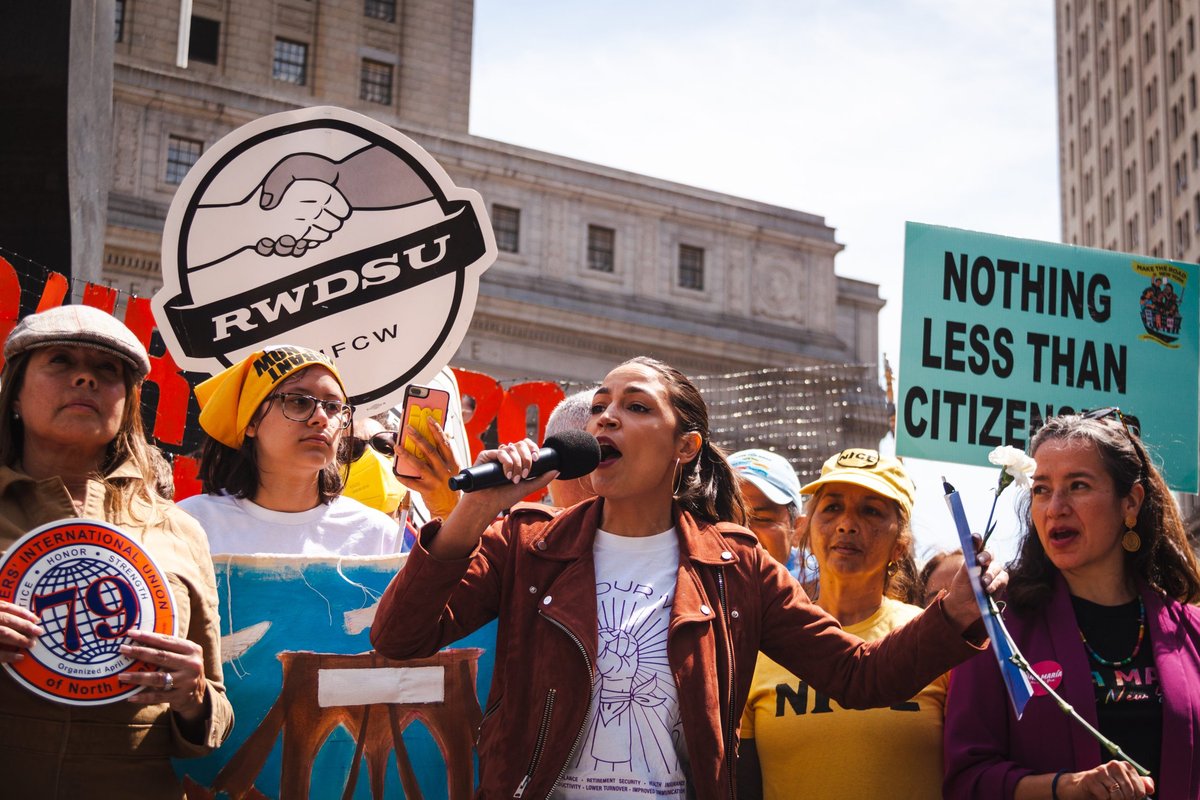
A recent CNN/SRSS poll showed that 34% of Democratic-leaning voters identify themselves as Democratic Socialists. This comes as socialism in general is rising in favorability in the greater American populace, currently at 39% approval. Because of this, a slate of DSA members and progressives have been victorious in primaries across the country. First Mamdani, and then Melat Kiros in Colorado, Darializa Avila Chevalier in New York, and now Adbul El-Sayed, who stands on the precipice of victory in the Michigan Senate primary.
Much of this comes from frustration towards the Democratic establishment. When the Democratic party was polling at record lows in early 2025, there was a power gap within the party of an insurgent group who could challenge the party’s leaders. Currently, the DSA and progressives in general have filled this power gap and provided an appealing platform to disenfranchised progressives within the Democratic party.
However, many moderate Democrats, who make up an equal portion (34%) of the party as Democratic Socialists, see the shift to the left as alarming. This has led to a detente between the two factions of the party. This split comes at the worst possible time for Democrats, who are gearing up for one of the most important midterms in U.S. history. If Democrats fail to win the House, any attempt of disrupting the Trump administration’s agenda will be nullified.
Many moderate Democrats have criticized the primary wins of progressives in swing states, out of the worry that they will complicate the Democratic party’s chances of winning the midterms. However, many progressives have criticized the establishment’s endorsement of unpopular moderate candidates in an attempt to disrupt the rise of progressives (see: Haley Stevens, who polls nearly 20 points behind El-Sayed in the Michigan primary with a day until the election and has been endorsed by the likes of Chuck Schumer).
If this split grows into a harsh divide before the midterms, Democrats will risk losing their chances at a House majority. It is also worth mentioning that Republicans face a similar issue, a battle between far-right “groypers” and Trump-backed candidates. However, the Republicans have been able to hold their coalition in the House with varying degrees of success through the power of Donald Trump’s grip on the party.
Another issue that Democrats face is their lack of money before the midterms. Combined, Republican PACs and the RNC have a roughly one billion dollar war chest to be spent in the midterm elections. Compare this to the relatively puny $400 million that the Democrats have, and their problem becomes clear. The RNC is also in a much better financial position as November approaches.
Right now, the DNC has 16.5 million dollars of cash and 18.3 million in debt. This comes as progressive Democrats don’t want to donate after the 2024 election according to Politico. The biggest issue with this is there isn't a solution. The party is holding for dear life in terms of funding coming into the 2026 election. This January the DNC took a $15 million dollar line of credit to finance midterm preparation. While the DNC says they are low on cash because they focused on deploying capital early into organizing, data tech, and rewiring state parties instead of sitting on millions in cash. The data says otherwise. Ken Martin, the head of the DNC argues that cash was converted into state-level field infrastructure. Data shows this spending was inefficient rather than high impact. The DNC distributes $17,500 monthly to all 57 states and territories under its State Partnership Program. FEC filing from the DNC states that they spent nearly $840,000 on non-voting U.S. territories like Guam, American Samoa, and the Northern Mariana Islands. Spending on territories with no federal electoral input as they do on battleground states like Pennsylvania or Michigan represents a structural failure to maximize donor dollars. Data shows that major Democratic donors have bypassed the DNC, viewing it as badly managed. The DNC has many many operational, financial, and strategical blunders. Reporters found out that the party lost $29000 directly to an email phishing scammer posing as Ken Martin (head of DNC).