
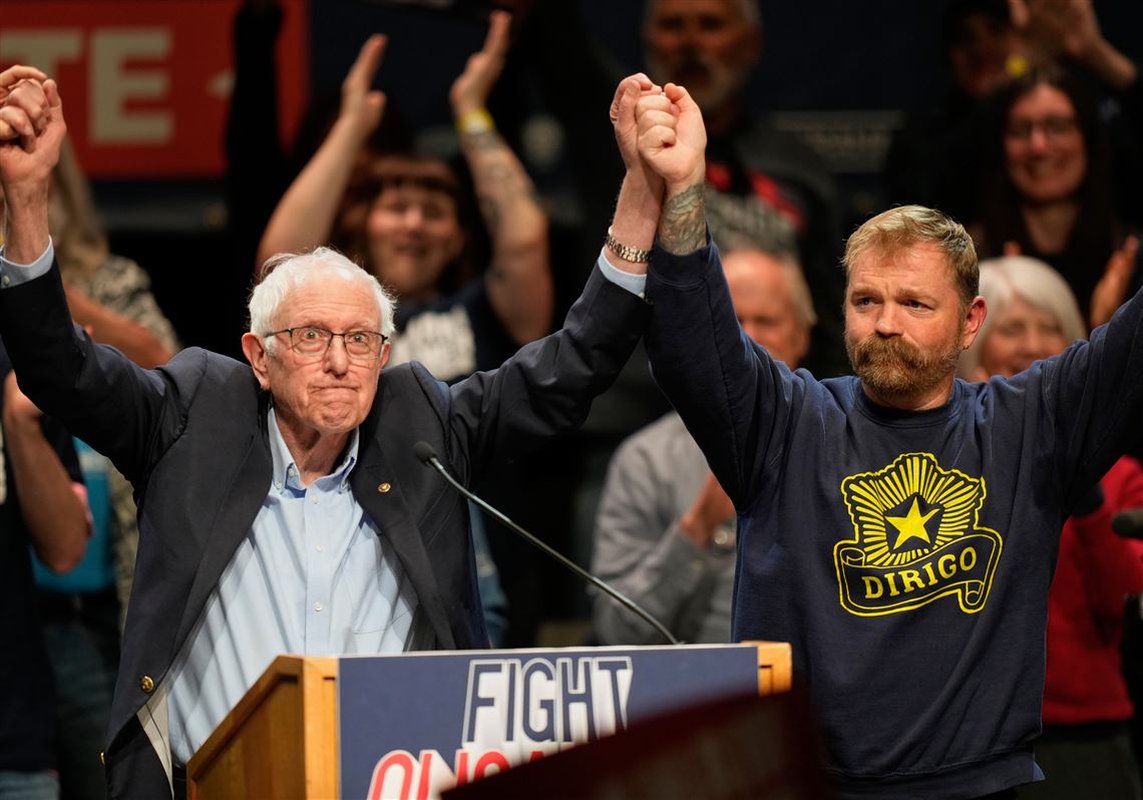
Author's Note: This article focuses on the political consequences of the most recent allegations surrounding Graham Platner as of July 7th, 2026, not on the allegations themselves. Most importantly, my thoughts are with anyone who has experienced sexual assault or abuse. The allegations discussed here are serious and should be investigated to the full extent of the law. At the time of writing, Platner has denied them, and the legal process is ongoing. Regardless of the outcome, survivors deserve to be heard with compassion, and allegations of this nature should be treated with the seriousness they warrant. While writing this article, more details about the extent of Platner’s alleged sexual abuse were revealed by victims. Given that the nature of this article is not to run through the specifics of the allegations, I’ve chosen to omit them. My thoughts and prayers are with Mr. Platner’s alleged victims and all victims of sexual assault and rape.
What do you get when you combine a figure with the progressive politics with the populist, rough-around-the-edges rhetoric of Donald Trump? The answer, some would tell you, is the future of the Democratic party. The answer, some would tell you until yesterday, was Graham Platner.
But as it stands today, members of both the party establishment (such as Chuck Schumer and Hakeem Jeffries) and the progressive wing (Ro Khanna, Zohran Mamdani, and Bernie Sanders) have either rescinded their endorsement and/or have outright called for him to drop out. How did we get here? How will this affect the Senate race in Maine? And most consequentially, what will this mean for the future of populist politics in America?
For nine months, oyster farmer, veteran, and community organizer Graham Platner withstood immense political pressure: from a military tattoo containing Nazi imagery, to offensive Reddit posts, to allegations of “toxic and unsettling” behavior, to admitting to have struggled with serious alcohol abuse, to describing himself as a “longtime fan” of a conspiracy theorist who promoted the idea that Israel was behind Charlie Kirk and JFK’s assasinations, to sending explicit messages to other women while married–and today, serious rape allegations that have resulted in his odds of dropping out of the race at 94% according to Kalshi. All of these scandals have left the party split.
For the past few decades, being a high-level politician meant being well-educated, electable, and with a squeaky-clean past. For one side, that’s changed. The rise of Donald Trump showed that voters can get past a vulgar candidate with a very questionable and controversial past if they’re popular enough. Trump stood out in 2016 because of the way he spoke. He spoke to supporters like they were his personal friends. He spoke about his opponents like they were enemies of the American people. 10 years on, the Democrats have for the most part continued to run the traditional faces of politics. According to the Pew Research Center, of the 22 members of Congress that do not have a bachelor’s degree in 2023, 14 were Republicans. In a political climate where the highly controversial Ken Paxton can withstand “20 years of scandals” to win the Republican Senate nomination for Texas, it says a lot about the Democratic party that one minor (or in the case of Platner, six major) scandal(s) can entirely uproot your political career. This is why the case of Platner is so outrageous. It feels like what he’s being accused of was right in front of our faces, yet in an attempt to change the party’s culture, the majority of progressives only stopped supporting a morally questionable individual when graphic details of his sexual assault were revealed.
To mainstream Democrats, Graham Platner was simply too big a risk to take. His past comments and actions were impossible to overlook, and if something worse came out, the seat would be in trouble. Congressman Ritchie Torres’ post on X contained an implicit “I-told-you-so”. He wrote: “I have no endorsement to rescind. Graham Platner should drop out immediately.” Pennsylvania Senator John Fetterman ran a similar using a campaign strategy resembling Platner’s but feuded with the candidate in June, having been described by Platner as an “asshole” at a town hall. Yesterday, he appeared on FOX News, calling for Senator Bernie Sanders to apologize to Platner’s victims and to the Democratic party for “pushing” him onto them.
On the other hand, to many hard-left progressive factions, supporting someone like Platner was a litmus test: a rugged, working candidate who could relate to and stick up for Joe Blow, getting the party back in touch with the American people. To them, the attacks on him came not from a place of concern but from fear. Fear of populism, fear of the working class, and fear of a candidate who didn’t come with an Ivy League education or 15+ years of working for an NGO. In June (before the recent rape allegation, but still after a considerable number of scandals) Kyle Kulinski, internet political commentator and host of Secular Talk told viewers that if "we’re convinced you walk the walk on policy, we’ll overlook personal issues. The days of weak apologetic Dems are over. Our tea party is here." In late May, Kulinski wrote that "Platner could've sext my mom and I'd still vote for him" in a post on X.
Taking a massive gamble, progressive Democrats brushed aside his controversies and banked on voters reasonating with his anti-establishment message.
For some time, it seemed like this gamble would pay off. In the primary, Platner defeated former Maine governor Janet Mills with record-setting numbers, and with the support from high-profile progressives around the country, he seemed destined to pull off a Zohran-esque victory. The polls backed him, too. He led in four of the five publicly released polls between the primary and the allegations, and the only pollster that projected a win for his Republican challenger, incumbent Susan Collins, was FOX News. Prediction markets like Kalshi and Polymarket had his odds to win at over 70% (those numbers fell to 55% after the sexting scandal).
In hoping to break the Democratic mold, progressives clung onto Graham Platner for too long. It is a categorical failure that this many flags were consistently ignored, and while the Democrats are still favored to win the Senate seat in November, the allegations against Platner could pause party events and advertising until a successor is chosen. Finding a new candidate this late will also not be easy, as the names floated–gubernatorial candidates Troy Jackson and Nirav Shah– will need to launch campaigns and win a new nomination. Unlike California Gubernatorial Candidate Eric Swallwell, these allegations came after the primary, which is why they could be detrimental to party morale, win or lose.
In the words of Rep. Ritchie Torres, "The warning signs in Graham Platner were there in plain sight. Many chose not to see them. Others extended him a presumption of grace they would never have given to their ideological enemies." Few statements better summarize what the Platner saga reveals about today's Democratic Party. Neither faction consistently endorses candidates who can earn the full confidence of the other. Progressives have a valid reason to want to shake things up, even if that means running a candidate who isn't politically correct. But their judgment of character and continuous support of an individual with such troubling morals and conduct will lead voters to question candidates they back in the And while establishment Democrats may seem overly harsh when judging candidates' pasts, in this case, their concerns proved right. Their worries cannot be written off again in the way they were in Maine. Ideological purity should not have blinded progressives until the allegations became too much to defend. But establishment Democrats also shouldn't be so afraid to run candidates who are a little more risqué in the future. If the Democrats are not able to reconcile as a unit, they will lose at the national level in 2028.
As of July 7th, 2026, It’s safe to say that the Graham Platner experiment is on its last legs. But it leaves Democrats with a few party-defining questions, especially as they approach the next Presidential election:
Question 1: Where should the line for acceptable behavior and rhetoric be drawn? What concerns should be taken seriously and what concerns should be written off? How can the party avoid a situtation like this from happening again without requiring presidential hopefuls to have been careful about what they say and do for 20+ years?
Question 2: Will a polite, diplomatic, and stable candidate feel refreshing to voters post-Trump? Or did the failures of the Biden Administration prove that voters want someone who can shake things up?
Question 3: How can the party avoid the ideological purism that has plagued it for so long? Can the Democrats run a candidate who appeals to both the progressive and moderate factions of the party, while appealing to independents, swing voters, and the nation as a whole?
Question 4: Which side of the party should be kingmaker? Has one side proven their electability better than the other?