
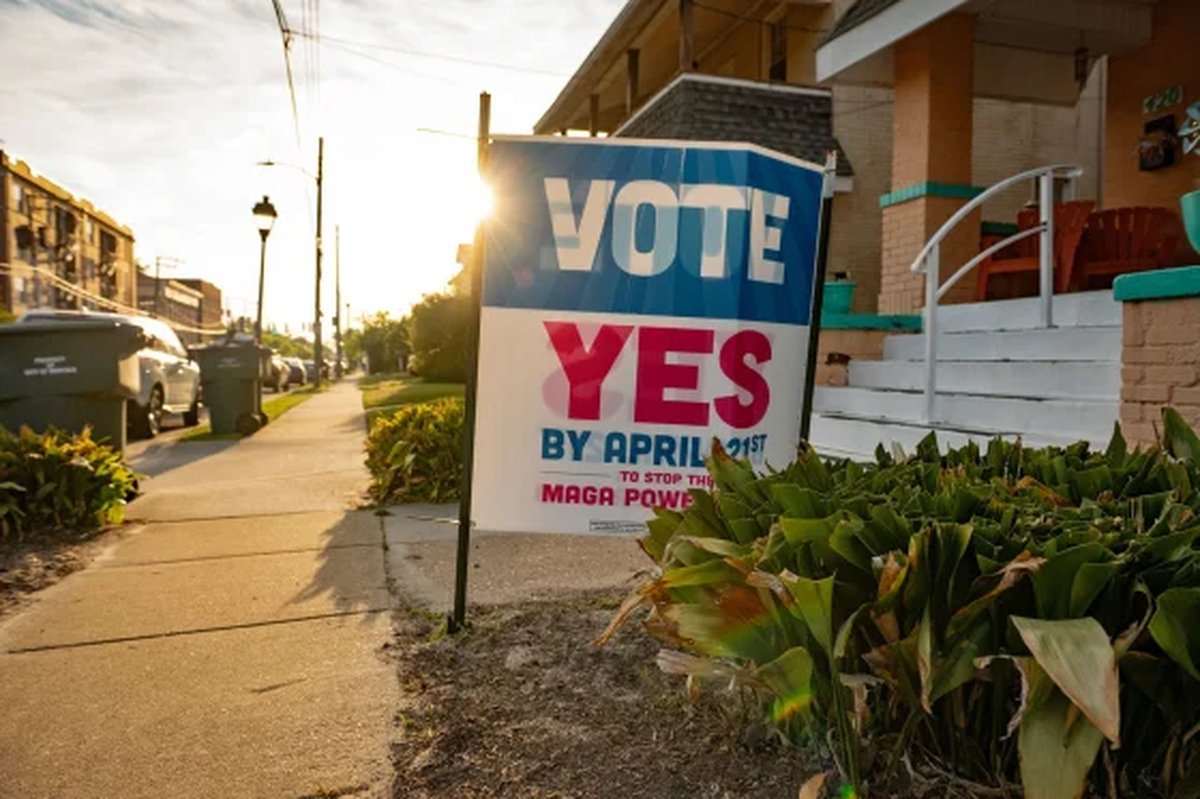
The Virginia redistricting referendum passed, redrawing the Virginia congressional map to give Democrats 10 out of the 11 total seats. The previous map was drawn by a bipartisan commission, and resulted in the current 6-5 Democrat/Republican divide. The referendum won by a somewhat narrow margin of less than 3%, with 51.4% voting yes and 48.6% voting no.
This was a huge victory for Democrats, who must win the House in order to gain control of congress in 2026. Democrats would receive 5 seats from this redistricting (which was not drawn by a bipartisan commission). The referendum is partisan, and certainly favors the Democrats at the cost of Republican voters. It is the latest in a string of gerrymandering efforts that were kicked off by Texas’ redistricting in July.
Although the referendum is a win for Democrats, they did not overperform their gubernatorial victory in November, and barely overperformed Kamala Harris’ victory in 2024. In fact, Republicans overperformed Trump’s share in 2024 by a fair margin, a statement that has grown increasingly rare as Democratic overperformance has become almost ubiquitous across America. Democrat Abigail Spangberger won the gubernatorial election by 13 points, far greater than the 3 points the redistricting referendum won by. Republicans overperformed their voter registration numbers by 18%.
Democrats outspent Republicans in the referendum by 2-to-1. Had Republicans put more of a focus into spending for the referendum, they could have closed the margin or even won. The Trump administration also gave the referendum little attention – perhaps with more support, Republicans would have gone out to the polls in greater numbers.
Although Democrats underperformed, precincts with high Asian populations and other POC overperformed, even compared to Spanberger’s win. Black voters overperformed Harris by 4 points, but White voters underperformed and rural voters underperformed by 6 points. Polls had consistently shown the referendum with +6% net-favorability, meaning that the final result underperformed the polls by around 3%.
The Democratic underperformance was due to a few reasons. For one, gerrymandering is not something that draws much explicit support, and is in this case a “last resort” by the Democratic party to counter the gerrymandering in Texas and other red states. The new map is also extreme, considering that Virginia is far from a solid blue state and only one out of the ten seats will be Republican.