
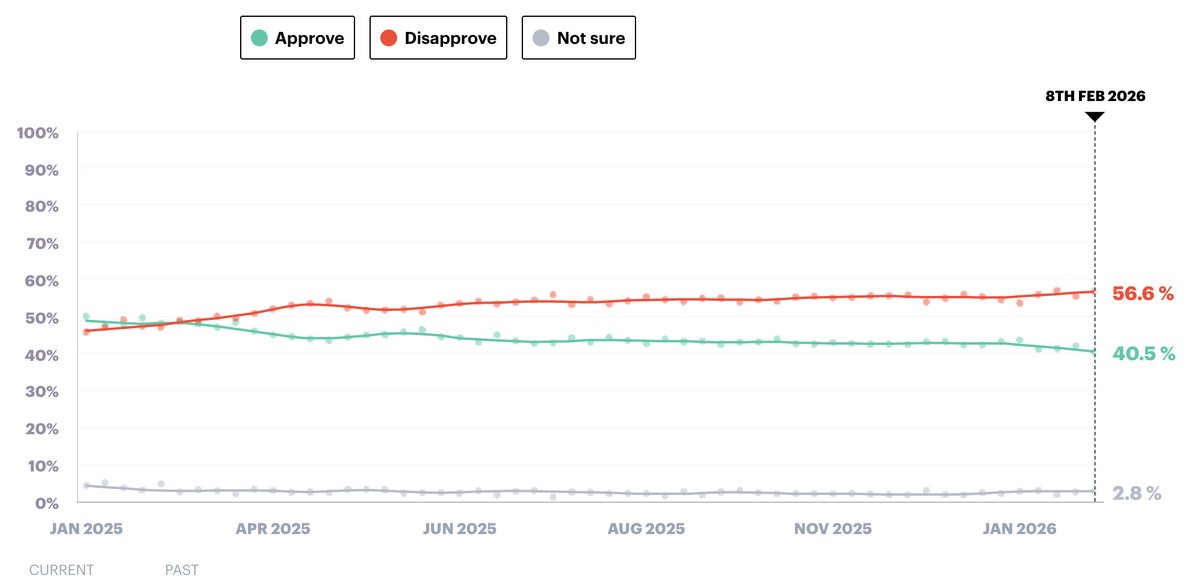
It’s widely known that President Donald Trump’s approval rating is at an all time low. The New York Times and other left-leaning media organizations constantly hold it over his head to prove that, despite winning the popular vote, Trump is not a popular president. His deployment of ICE in American cities, repeated foreign intervention despite literally running on a platform that emphasized “No New Wars”, and his notorious and prominent involvement in the Epstein files have all contributed to his unfavorability.
During the 2024 election cycle, he was seen by most working Americans and Independant voters as the more sensible candidate who’d end the madness of Biden-era political correctness. He criticized “elites” and a boogeyman-like upper class that made decisions to shift American culture and institutions leftward. He seemed different from the brash firebrand who stunned the country and the world in 2016. His populist attitudes won over not just his MAGA base but political independents who’d never imagined themselves voting for Trump, like suburban moms and Black business owners. This image worked, and he won the popular vote for the first time in his political career, for the first time in 20 years for a Republican. Many critics contend that his shift away from earlier populist stances, for example, promoting policies perceived as favorable to major corporations like Tesla and Intel, undercut the anti-elite message that helped him win broad support from working Americans and independents.
But what these polls fail to recognize is the fact that the majority of self-identified Republicans still overwhelmingly approve of Trump. According to the Pew Research Center on February 12, 79% of Republicans still approve of his presidency. The divide between the rest of the country and the harcore MAGA base on Trump represents his loss of independent voters. An extremist will rarely get the support of the populace, and Trump’s actions have certainly been deemed too extreme for many who flipped red in 2024. This could mean that the Republicans run a more moderate candidate in an effort to win back voters that they’ve seemingly lost. Overall, Trump’s trajectory highlights the enduring tension within the Republican Party between energizing a loyal base and sustaining the broader coalition needed to remain politically competitive.